How to find ideas

As an author, I often hear the inevitable question: “Where do you get your ideas?” Inspiration can be found everywhere, but there are a few idea sources that work particularly well for me. Maybe they’ll work for you too.

1.) Educational shows – Discovery Channel, Science Channel, and History Channel can be your best friends. The world is full of fascinating facts, large and small. Any one of them can be the inspiration for a new scene in a story, a plot device, or a whole new project.

2.) Excellent photography – Sometimes when I’m feeling in a creative funk, I just load up Flickr and browse random photos. Again, the world is a fascinating place and there are countless amateur and professional photographers out there capturing inspiring moments and places.

3.) Reading – I read a lot of novels, but I also read blogs, news articles, scientific journals, etc. The more you know, the more creative you can be. Each bit of knowledge is like a new color in your palette, allowing you to add more vibrancy and variance to your work.

4.) The shower – Yes, the shower! One of the few luxuries I allow myself is hot, long showers. In the shower my muscles relax, the soil of the previous day washes away, and my soothed mind inexplicably finds ways to work out plot problems that had been vexing me for days. Some of my greatest “A ha!” moments have hit me in the middle of a shower. It’s kind of similar to the famous “Eureka” moment Archimedes had in his bath tub.

The items I listed above honestly account for the vast majority of the fantastical stuff I’ve put in my writing, but I’m always looking for new sources of creative energy. What works for you? Let me know in the comments. 🙂

Seth Godin’s eBooks

Seth Godin is a smart guy. He’s also creative, and I like the way he comes up with new ways to do old things. For the past year he’s been working on the Domino Project, an experimental publishing imprint that distributes mainly through Amazon and tinkers with a lot of different methods for pricing and promotion (including publishing “sponsored” books), just to see what would happen. Recently, Seth decided to wrap up the project, and wrote a post summing up some lessons learned (http://sethgodin.typepad.com/seths_blog/2011/11/the-last-hardcover.html). It’s quite an interesting read, but I found this little gem to be most intriguing:

Sponsored ebooks are economically irresistible to readers, to sponsors and to authors. I’m proud to have pioneered this, and I think it’s a trend worth pursuing. The value transfer to the reader is fabulous (hey, a great book, for free), and the sponsor gets to share in some of that appreciation. The author gets a guaranteed payday as well as the privilege of reaching ten or a hundred times as many readers.

I’ve talked about this kind of thing before in my post, “Ads: The Future of eBooks?”. In that post, I talked ad-supported books, but Seth has an even better idea with “sponsored” books, with one company giving a “brought to you by” message, and that’s it. Just tolerate that one sponsorship message, and your book is free. The sponsor pays the author directly. Not a bad idea, but one that could certainly lend itself to becoming a tool only for the few lucky top names in the biz with the pull to attract such a deal. For the rest of us, the ad-supported model used by blogs may be the answer. Regardless, Seth has a lot of cool ideas on the topic of eBooks and digital publishing, and if you’re not following his blog, I highly recommend it.

Our Music is Meaningless

I submit to you this: a brief rant about the sorry state of modern popular music.

Yes, I know. This isn’t new. People have been ranting about the decline of music ever since the autotune made its way into just about every damn song on the radio. But I’m not talking about the musical quality of the industry today. In fact, I’d say from a production standpoint, music is about the same as it’s been for the past 30 years. A good hook is still important, and dance music is still as much of a moneymaker as it always was. It’s not hard to find a beautiful piano melody or a rousing orchestra in today’s songs, and the phat beats are still around.

The problem I have is not with the melodies. It’s the lyrics. Our lyrics mean nothing. Our songs do not sing the body electric. The words from our bards are shallow and selfish. No one on the radio or on TV is singing anything that matters.

Take for example, the hot songs out right now. There’s Rihanna’s “We Found Love”, which is a great tune but the lyrics are…well…crap. #2 on the Billboard Chart is “Sexy and I Know It”, which is most notable for being a song by a band called LMFAO (a prime example of how far we’ve fallen). Don’t get me wrong, it’s a fun song, but completely meaningless.

The only recently-released songs in the Billboard Top 20 that I’d say actually have lyrical value are Adele’s “Someone Like You” and Bruno Mars’ “It Will Rain”. They’re both poetic, but they’re love songs, and as much as we all love to sing about love lost or unrequited, it’s not a profound topic.

There are no songs about social change. There are no songs about maturing. There are no songs about learning a life lesson. Hip-hop used to mean something. It used to have a social slant with clever lyrics designed to get people to think about what they were doing and where they were going. Gone are the days of De La Soul and Arrested Development. Say hello to Lil’ Jon and Drake.

Alternative rock used to be profound. Nirvana changed the game. Pearl Jam was the voice of a generation trying to reconcile suburbia with rebellion and a world at constant war. Where are our anti-war songs now?

Of course, I’m sure many of you are thinking that these kinds songs do exist, they’re just not in the mainstream. It’s all indie. And you’re absolutely right, and that’s my point. In the past it wasn’t hard to find meaningful tunes around. They may not have been Billboard Top 20 material, but they were around, the big labels supported them, and they got radio and video play (the only reason I discovered Arrested Development was VH1 played them constantly back in the day). Now, there’s no social message to be found in the mass media.

And the saddest part of all? Bands that used to have a message are now completely and utterly moronic. The Black Eyed Peas broke out into the mainstream with “Where Is the Love?”, a meaningful song with an equally meaningful video that posed the question, “What’s wrong with the world?”. Now, B.E.P. writes the stupidest songs in the world, sugar-coated with some well-crafted beats. But, for a moment, let’s take a walk down memory lane, and remember the good old days when mainstream artists still produced art. It wasn’t that long ago

Writing is a Skill. Learn it.

“Must have excellent written communication skills.” You see this all the time in job posts, but what does it really mean? Do people really even care about writing skills anymore?

The answer is yes.

All of us are presented with moments when we must communicate our ideas in written form. It may be an admissions essay, or a cover letter for your resume, or a complaint to your landlord, an explanation to a co-worker, a sales pitch for a new client, or a letter to your boss justifying your reasons for a raise. You will have to write, and oftentimes what you write will affect the chances of you getting what you want, so you might as well learn how to be good at it.

Yes, you have to learn how to write. For some reason, many people seem baffled by this idea. “I’ve been writing all my life,” they say. “It can’t be that hard.” These are the same people that fill literary agent inboxes with horrible novels and are outraged when they get rejected.

To those people, I ask a simple question — can you talk? I’m sure you can. But does being able to talk automatically mean you can sing? Of course not. You have to learn how to sing. You have to practice. Even if you have an innate talent for it, that only gets you so far. You still have to learn the art of singing if you want to move people’s emotions with your voice.

The same is true for writing.

With a little research and practice you can dramatically improve your skill at communicating with the written word. You can learn to evoke sympathy, bring people to tears, or stoke the fires of anger with your words. You can learn how to transport your thoughts into someone else’s mind with nothing but letters. Writing is the closest thing we have to telepathy.

But, like all skills, writing demands a sacrifice. Learning to write well is a chore. It takes work and research, and one can get lost in the vast sea of “How to Write” books out there (it has long been said that the best way to make money at writing is to write a book about writing). But the most important thing you’ll ever learn about writing is this:

All writing — all writing — is storytelling.

When you read a blog, you’re reading a story about one person’s experience. When you read a news article, you’re reading a story of real events and people. When you read a product description, you’re reading a manufactured story a marketing team wants to tell you. Even as you read this post, what you’re reading are tiny stories about types of people and events and situations you can relate to as part of my efforts to convince you to do something. Learn how to tell good stories, and people will want to listen to what you say. That is influence. That is power.

So, where to begin? First, write and write often. Get a blog. Sign up for a free blog Blogger or Tumblr or LiveJournal and just write. Blog every day if you can. You can tell others about your blog, or not. It doesn’t really matter, because all you have to do is write. Write about whatever you like — food, poetry, politics, cats. Whatever. Just remember that your goal is to write compelling stories about your topic. Stories have characters, and settings, and a firm beginning, middle and end. Your writing should have all of these.

While you’re doing your writing, read. All good writers must be good readers. I’m sure you’ve read stories before, but when you read as a writer, stories take on new meaning. You dissect and analyze the style and technique of the author. You see things from a different perspective. For example, as a reader I enjoyed the Harry Potter books, but it wasn’t until I became a writer and took a more technical look at the books that I truly appreciated J.K. Rowling’s skill (the Invisibility Cloak is a brilliant plot device).

You should also read some books and articles in that aforementioned sea of “How to Write” material. I personally advocate Sol Stein’s Stein On Writing. The Internet also has a wealth of great material for learning how to write, and I particularly like this timeless article on Persuasive Writing, which is the most useful type of writing for the average person.

And when you’ve done all that writing and reading, go back and look at what you wrote earlier. Do you see the flaws? Has the practice and research changed your ideas of what “good” writing is? If so, take note of what you’ve learned, apply it, and keep writing and reading. If not, keep writing and reading. Remember you’re working on a skill here and, as required with any type of craft, mastery takes time. But stay committed, and I guarantee that new perspectives and opportunities will open up to you because of your new ability to move hearts and minds with your words.

iPhone app: Scribblr

It seems like everyone has an iPhone these days, and everyone has a Facebook account too. What happens when you combine these two cultural forces in a drawing app? You get Scribblr!

A couple of friends of mine have released a fun drawing app that combines how well you know your Facebook friends with a blank canvas to be creative and funny. In their own words:

Scribblr is a fun and addicting game that combines drawing with how well you know your Facebook friends.

Connect with Facebook to draw things about your friends, or create images for yourself. Doodle your way through dozens of things to draw then share them with your friends.

Play and laugh by yourself or with others for an entertaining time with friends. Scribble something barely recognizable or create a masterpiece. Sketch something realistic or downright fantastic. Be silly. Be playful. Be cute. Maybe all of the above.

Download Scribblr for FREE on iTunes

My new fantasy novel: The Ninth Order

I love epic fantasy, and I live science. When I started writing, I wanted to combine the two. The result? My latest novel, The Ninth Order. It’s now available on all major eBook platforms including Kindle, iTunes, and Smashwords.

The Ninth Order on Kindle

The Ninth Order on iTunes

The Ninth Order on Smashwords

Here’s a brief synopsis:

When the world went mad and war brought civilization to ruin, the Rezernaan restored it. Some call the Rezernaan wizards, and others call them radicals. A young man named Falki rose to the top of their ranks with unprecedented speed. Now he will face a danger that will lead him to partner with twin rogues, an exiled murderer, an heir to an industrial empire, and a strange man from his past.

Falki lives in a world that is still struggling to recover from the ravages of The Fall. The golden days before The Fall were guided by a simple phrase: “Progress through knowledge; knowledge through science”. But then the Great War came, and all the sciences of the past led to catastrophic destruction. Out of the ashes rose a mystical group of protectors—the Rezernaan.

The Rezernaan and the remnants of the civilized world live on a tiny group of idyllic islands that were miraculously spared from the chaos of The Fall. The first pilgrims arrived centuries ago, and found a race of people called the Panotti already there. The Panotti are small in stature, short in lifespan, and fiercely devoted to nature. Falki is their most famous son, and his skill with Rezernaan techniques is legendary amongst his people. But there are others even more powerful than he.

When Vannekar, a malcontent senior Rezernaan, suddenly begins to advocate a revival of the old sciences, the leader of the Rezernaan chooses Falki to run a covert mission to undermine Vannekar’s efforts. Falki recruits a skilled but contentious crew of specialists who will use all their wits and abilities to foil Vannekar’s plans for revolution, but their foe will not go down without a fight. He is cunning, strong, and convinced that the Rezernaan must change, or die.

This isn’t your typical swords and sorcery fantasy. When I started on this story, I was determined to do something new that crossed genres and didn’t rehash the fantasy tropes we’ve all seen a thousand times before. I think The Ninth Order is a fun mashup of the best elements of fantasy and science fiction. It’s the kind of story you often see in Japanese RPGS like the Final Fantasy franchise, but rarely see in American lit. For some reason stories from the west have always drawn a severe line between sci-fi and fantasy. But the two genres really aren’t that different. Both types of story create fictional worlds of pure imagination where the impossible is possible and the unlikely happens every day. But western sci-fi rarely focuses on themes like nature worship and agrarian societies, and western fantasy totally eschews anything resembling high-tech. I believe there is an unexplored middle-ground between these two genres, and authors can use successes in the video game industry as a guide.

So if you’re a gamer and you loved the blending of high-tech and magic in games like Final Fantasy 10, check out The Ninth Order at one of the following links:

The Ninth Order on Kindle

The Ninth Order on iTunes

The Ninth Order on Smashwords

The Remortal on iTunes

I’ve reached another milestone in my self-publishing journey. My first released novel, The Remortal, is now available on iTunes for all sorts of iThingies.

iTunes is no stranger to indie artists; musicians have been plying their wares on this digital marketplace for years, and most people like it. You get to virtually bump elbows with the big boys — the cool alternarockfolk music you wrote with your buddies during your stint as guitarist in a garage band can exist in the same store as The Beatles and Coldplay and Bieber. But the path to iTunes for indie authors was a bit trickier. Authors had to find some way to get an ebook app created for the app store since there wasn’t an Apple-sanctioned eBook marketplace until the iBookstore came out with the first iPad (even then, Apple initially had no option for indie authors and only listed titles by the big publishing houses). A number of “middle-men” popped up to offer app platforms that would let you get your book on the app store, but at a price, and the user experience was less than ideal.

Then Smashwords inked a deal with Apple to serve as the “publisher” for scores of indie authors, giving us poor scribes an entry into the iTunes White Palace via the back door. Now writers everywhere can sell their stuff to the millions of people using iTunes, and especially those users with the “magical” iPads.

So if you want to buy my book, The Remortal, on iTunes, point your interwebs machine to this link: http://itunes.apple.com/us/book/the-remortal/id452916695?mt=11

eBook Cover design: The Ninth Order

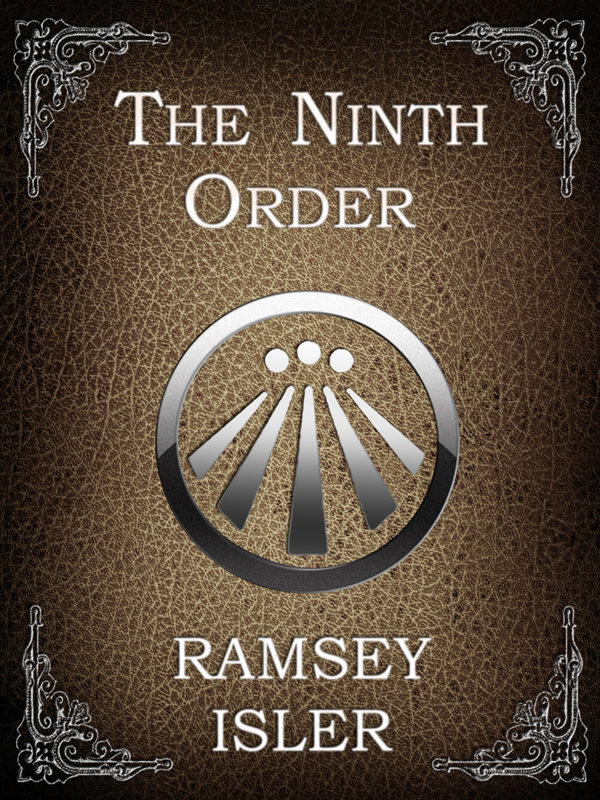
Here it is. The cover for my next novel, The Ninth Order. Look for it on Amazon and Smashwords in August 2011.

Click to see full sized version
The Ninth Order - book cover for fantasy novel by Ramsey Isler

This cover (which I designed myself) is the result of a week’s worth of Photoshopping and playing around with book cover concepts. I eventually settled on this idea because it fit the theme of the book: a mix of traditional fantasy and sci-fi elements. It features a leather book cover, adorned with aged metal corner ornaments. The center of the book features the symbol of The Ninth Order of Rezernaan stamped in bright, untarnished metal; immune to the effects of time.

Right now I’m only releasing my novels as eBooks, and cover design for eBooks is hard. It’s much different than designing for print. The biggest challenge is that eBook covers are most often seen as teeny tiny thumbnails, and rarely at their full resolution. That means what you design has to look good at 300 pixels wide, and oftentimes even smaller than that (Amazon’s thumbnails are often 100px wide, or smaller!). The only time readers will see the cover in all its glory is when they buy the book and see it on their PC, tablet, or eReader. And even then, you never know exactly what the reader will see (Kindles don’t even have color, so much of the design is lost). Plus, digital book readers have a handy feature that allows you to pick up reading right where you left off, so readers might only see your precious full-size cover once, and never again.

This is dramatically different than print books, where the cover/book jacket is a constant part of the reading experience. Every time you go to pick up that book, you see the cover. You feel the stamping and embossing. The cover is designed primarily as a marketing tool to entice you to pick it up, but it’s also an integrated part of the book and the act of reading it. Not so with eBooks. Once the marketing purpose is fulfilled, the cover takes a backseat.

So for eBooks, the cover design is most important for marketing. It’s the first and only image associated with your book, and as I mentioned earlier, it’s often seen in small scale (a scale which the author has no control of). Joel Friedlander at the Book Designer blog has a wonderful post on ebook successes and failures in the Kindle store that describes the issues designers and publishers face when trying to make covers for the digital platforms. Great print covers often make for horrible eBook covers because text and subtlety are lost in those tiny thumbnails, and it takes a lot of consideration to make a cover work at a variety of scales. Smart publishers are starting to design covers specifically for the eBook platforms; another sign that the eBook revolution is getting bigger.

Weird Book Title

Yes, “Eeeee Eee Eeee” is really the title of this book. And yes, it’s an appropriate title. The book is about odd young people living odd lives and thinking odd things, so why shouldn’t have one of the oddest titles in the history of the literary industry?

The story is essentially about a screwed up Domino’s Pizza delivery guy who ends up in an underground world suicidal dolphins and depressed bears.

If that weren’t enough to get you itchin’ to read this book, here’s a snippet from the Publisher’s Weekly review for this crazy tale:

“Poet and blogger Lin’s debut novel uneasily documents the life of Andrew, a recent college graduate working at Domino’s Pizza while over-analyzing every aspect of his life: past, present and futureless. He drives through the suburbs reminiscing about college life in New York and his ex-girlfriend, stopping occasionally to express his boredom to his best friend Steve. When at one point, Andrew states that he wants to “wreak complex and profound havoc” upon capitalist establishments such as McDonald’s, it feels like Lin is attempting the same kind of attack on organized art. The novel, while short on plot, makes abrupt shifts in setting and point of view, and is pierced throughout by celebrity cameos and surreal touches: bears, dolphins (who say “Eeeee Eee Eeee” to express emotion, in spite of their ability to speak like humans), Salman Rushdie, and the president make grandiose declarations that are heavily saturated with the same sardonic wit displayed by Andrew and his friends. The novel dips dangerously into metafiction, with Andrew in the middle of ‘writing a book of stories about people who are doomed.’ The characters’ repetitive thoughts and conversations become strangely hypnotic, however, and Lin’s sympathetic fascination with the meaning of life is full of profound and often hilarious insights. ”

Imagine the book-buying scenario as an eager reader looking for this book saunters into a Barnes & Noble.

B&N salesperson: “Hello, welcome to Barnes and Noble. Can I help you?”
Buyer: “Yeah, i’m looking for EEEEE EEE EEEE!”
B&N salesperson: “Uh…security!”

It’s quite possible this kind of warped purchase scenario occurred to the author, Tao Lin, a strange little Asian man whose personal website is http://heheheheheheheeheheheehehe.com

I do suggest you read this book. It’s a real mind-bender. It reminds me a lot of the days when I tried to wrap my head around the non-linear and often nonsensical prose of William S. Burroughs. If you want to sample Tao Lin’s work, take a peek at the “Look Inside Link” on the book’s Amazon page. Let me know if you have a craving for pizza afterwards.

Book cover for

Ads: The Future of ebooks?

I’m going to propose something controversial, perhaps even blasphemous. My fellow authors may spurn me and say my dangerous ideas will ruin the industry. But here it is anyway: I think eBooks should have ads in them.

Now before you write me a nastygram, hear me out.

Today Amazon announced that AT&T has joined the ranks of advertisers on the Kindle. As odd as this may sound, it isn’t really new. Amazon first debuted the Wi-Fi Kindle with Special Offers in April and the 3G version in May, which gave marketers new ways to ply their wares to consumers on one of the most popular gadgets out there. General Motors, Olay, and Chase already sponsor ads on the Kindle. If you agree to buy a “special offers” Kindle and see all these sweet ads, you shave some money off the purchase price of the Kindle. The AT&T deal is notable because it gives an even bigger discount for the 3G “special offers” model (15% drop to $139). Ads on Kindle offer nice discounts on products from Amazon and other companies, and they appear on the Kindle’s screensaver when the device is turned off and also appear on the Kindle’s home screen. Amazon’s “special offer” Kindles don’t show ads within the actual content of the books, yet.

Most of the industry pundits are looking at this news from a competition perspective, especially as Amazon continues to fight off the iPad and other e-readers. But there’s another angle here that a lot of people are overlooking.

We’re seeing ads on a book platform.

Think about that for a second. The ad-supported model that has worked on just about every form of modern media is finally encroaching upon the book market. It’s a sign of the times, but we need to go a step further.

Ads in readable material are nothing new. Magazines have had them for ages. So have comic books. But booky books (the kind without many pictures and lots of pages) have never really been a good platform for advertising, besides the occasional 1 page ad at the end of the book, which sells other titles by the same publisher. But as digital books on eReaders, smartphones, tablets, and even PCs become more common, the opportunities for advertising get better and better. Although the purists are all filled with book nerd rage about this possibility, I think it might actually help the book industry in the long run.

Just about every other form of entertainment is ad-supported these days. TV? Ads. Radio? Ads. Mobile apps? Ads. Web? Ads everywhere you look. Even the movies you see at the theater are doing product placement more than ever. Hell, some movies are just 2-hour advertisements (Transformers, for instance, is really just a big toy commercial). Books, especially novels, may need to get with the program, especially since the novel is already the least-favored form of fiction now.

So what would an ad-sponsored book world look like? Well, imagine that all the books you could ever want were available to you for free, legally. You would simply go find it, download it, and start reading. Authors would make money on the same model most of the web works on: the content’s free, and the ads bring in the money. The ultimate goal of the author is to get people to read their work, after all, and when it comes to exposure, nothing beats the free price point (as the app markets on iOS and Android have shown us). Many indie eBook authors are already doing well with content that is already almost free (99 cent eBooks on Amazon are becoming increasingly common), so free is just the next logical step.

Here’s the thing: through ads, authors may make even more money than before. Instead of a one time payment, authors will get a cut of recurring ad revenue that accumulates as users read their digital books (and for series like A Song of Ice and Fire with books that have over a thousand pages, that’s a lot of opportunities to show ads). Maybe this would work on a commission basis, or pay-per-click, or pay-per-view. But whatever it is, it’s a continuous form of revenue for the writer. For example, if a writer has a chapter that takes place in Monaco, and at the end of the chapter the reader is presented with an ad for a heavily discounted trip to Monte Carlo, the commission from that sale could be orders of magnitude greater than the sale price for the book. eBooks could even be used to serve up video ads and trailers for movies in that book’s genre. Your epic fantasy book could be used to show trailers for The Hobbit movie, and its assorted merchandise. And of course, if you prefer to not deal with ads and pay your one-time fee, you’ll have that option (once again taking a page from the mobile app industry).

Google showed us that context-sensitive, relevant ads can be a big winner for blogs and online magazines. There’s no reason it can’t work for books too.

Free, ad-supported books on digital platforms with good ad-serving capabilities could be just the boost the book market needs. The Kindle with Special Offers has a prominent position on Amazon’s bestseller list, proving that readers are willing to deal with ads in exchange for a lower price. We just need the literary industry to be proactive for once, and take the lead in using technology to its advantage.